The Sustainability Scholars Program is an innovative paid internship program. We match UBC graduate students with on- and off-campus sustainability partners to work on applied research projects that advance sustainability across the region. Managed by the UBC Sustainability Hub.
Apply your research skills to real-world sustainability challenges
Get paid and gain valuable professional work experience
Develop applied skills and knowledge under the guidance of a mentor
Build your professional network and enhance your career prospects

How It Works

The program is open to full-time UBC graduate students from any program or discipline. As a Sustainability Scholar, you work under the guidance of a mentor on an applied research project that supports their organization's sustainability goals.

Apply

UBC Sustainability Scholars work on applied research projects across a wide range of environmental, economic and social sustainability topics. See our list of current paid internship opportunities.

Project Library

The Scholars Project Library contains hundreds of reports, charts, tool-kits, and more, documenting the applied research produced by Scholars since 2010. A useful body of knowledge to support further research around sustainability.

Partner with us

Partner organizations are essential to the UBC Sustainability Scholars Program. Partners provide work experience for UBC graduate students and benefit from their applied research.

Meet the scholars

UBC Sustainability Scholars come from all kinds of backgrounds and academic disciplines. Scholars stand out for being passionate about sustainability, having a strong work ethic, and for their applied research skills.

Fund scholars

Climate change, biodiversity loss, and growing inequality are some of the most urgent issues facing our world today. Support from donors will allow scholars to make a direct impact through organizations doing the on-the-ground work needed to address climate change and other critical sustainability challenges.

Program History

Sustainability Scholars’ projects have been helping to move the dial on sustainability across the region for over 10 years. Find out more about our history, milestones, and impact.

Fraser Estuary Research Collaborative (FERC)

A new stream in the Sustainability Scholars Program focusing on applied research with the goal of restoring and protecting the endangered Fraser Estuary.

Project Library

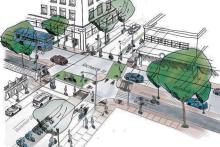
This project defines, inventories, and assesses Vancouver's high streets, analyzing the public realm, regional connectivity, and retail focus to guide future urban planning and design. The multidimensional findings reveal diverse high street characteristics, informing an evaluation toolkit that supports inclusive policies and enhances residents' quality of life, promoting economic and social vitality across the city.

Partner: City of Vancouver
Funder: City of Vancouver & UBC
Keywords: equity, diversity, inclusion, sustainable development & green economy, transportation 

PDF
2024
Zhujun He

This report aims to enhance the City of New Westminster's Outdoor Cooling Strategy by providing a comprehensive condition assessment of existing drinking water fountains and misting stations, identifying priority neighborhoods for additional cooling infrastructure, and proposing specific locations for new installations and upgrades.

Partner: City of New Westminster
Funder: City of New Westminster
Keywords: climate adaptation, green infrastructure, sustainable development & green economy, water 

PDF
2024
Feifan Yang

The City of Vernon aims to increase the uptake of home energy retrofits to reduce associated carbon emissions. However, homeowners often face challenges implementing energy retrofits, such us limited energy retrofit knowledge and difficulty accessing retrofit financial incentives. This report provides recommendations for the development of an energy retrofit toolkit to help homeowners and other interest groups understand various retrofit measures, financial incentives, and retrofit tactics.

Partner: City of Vernon  
Funder: City of Vernon
Keywords: climate mitigation, green buildings, low carbon buildings 

PDF
2024
Haonan Zhang

This project aims to provide guidance and resources for City of Nelson staff to incorporate sustainability considerations, specifically the reduction of embodied carbon emissions, into its procurement policy and processes. It provides advice on how to get started, then guides users through the pre-purchasing, purchasing, and post-purchasing phases of procurement with checklists and appendices of resources. Finally, it provides advice on adopting a sustainable procurement policy.

Partner: City of Nelson
Funder: UBC (Environment and Climate Change Canada, Pathways Grant)
Keywords: climate mitigation, low carbon buildings, supply chain management & green procurement 

PDF
2024
Christine Lee

This project analyzed and prioritized updates to Kamloops' policies and guidelines using a hybrid method that combined qualitative and quantitative data. Through literature review, policy evaluation, and interviews the project identified five major challenges and proposed thirteen recommendations. The findings aim to equip Kamloops with strategies to better prepare for climate-related hazards, fostering a sustainable and resilient community.

Partner: City of Kamloops
Funder: City of Kamloops
Keywords: climate adaptation, climate resilience, green infrastructure, sustainable development & green economy 

PDF
2024
Shiyao Zhu

This research represents one of the first steps in identifying workable strategies for reducing embodied carbon emissions (ECE) in new home construction in the City of Kamloops. It examines ECE literacy levels, building material preferences, and perceptions of construction stakeholders in the city regarding ECE reduction practices and potential policies. The report concludes with proposals for advancing the objective of reducing ECE in new residences in the city.

Partner: City of Kamloops
Funder: UBC (Environment and Climate Change Canada, Pathways Grant)
Keywords: climate mitigation, green buildings, low carbon buildings, sustainable development & green economy 

PDF
2024
David Owolabi

Lack of available labour is hindering the progress of retrofitting BC homes to increase energy efficiency. The report investigates the barriers and opportunities for workforce attraction across the following sectors: HVAC, insulation, window and door, general retrofit, energy advisors, plumbers, electricians, and renewable energy. The study includes a demographic summary, a policy and literature review, global case studies, and summarizes next steps for the Home Performance Stakeholder Council.

Partner: Home Performance Stakeholder Council Association (HSPCA)
Funder: BC Hydro
Keywords: climate adaptation, equity, diversity, inclusion, green buildings, leadership & behaviour change 

PDF
2024
Ulziilkham Enkhbaatar

In this report, we provide a glance at the state-of-the-art in air quality communication, knowledge translation, and visualization. We then apply the gathered knowledge in a case study by proposing changes to AirMap.ca - the most-viewed webpage on Metro Vancouver's website, which is responsible for displaying real-time air quality and weather data from the Lower Fraser Valley air quality monitoring network.

Partner: Metro Vancouver
Funder: Metro Vancouver
Keywords: AQHI, mapping, air pollution, web app, mobile app 

PDF
2024
Davi de Ferreyro Monticelli

This project involves a feasibility analysis of over 400 sites within the Capital Regional District to identify potential locations for solar photovoltaic (PV) installations. The study shortlisted 32 sites, with detailed analysis of the top 10, including hourly energy generation versus consumption, 3D solar PV design, capacity estimation, and shadow analysis. The selected sites, representing the highest energy consumers are recommended for prioritized solar PV integration and investment.

Partner: Capital Regional District (CRD)
Funder: BC Hydro
Keywords: renewable energy, solar photovoltaic

PDF
2024
Ali Hyder

This project introduces a brand-new concept called Universal Basic Access (UBA) developed to enhance access to essential services through transportation in alignment with the vision of Transport 2050, Metro Vancouver's Regional Transportation Strategy. The report includes a review of similar concepts and case study analysis and recommends ambitious goals and actionable steps to achieve UBA in the region by addressing major accessibility barriers and gaps in TransLink's 10-year priorities.

Partner: TransLink
Funder: TransLink
Keywords: equity, diversity, inclusion, social sustainability, transportation 

PDF
2024
Najma Nizar

This project analyzed the lifecycle costs, operational savings, and environmental impact of transitioning the Vancouver Fire Rescue Services (VFRS) fleet to electric vehicles. Through financial modeling, case studies, and data analysis, the report provides actionable recommendations for optimizing fleet operations, highlighting cost-effectiveness and sustainability benefits.

Partner: City of Vancouver
Funder: City of Vancouver & UBC
Keywords: active transportation, climate mitigation, transportation, zero emission vehicles 

PDF
2024
Seldon He

Road transportation is fundamental to society, yet it acounts for 40% of Vancouver's GHG emissions. This project aims to develop a framework to quantify carbon capture/reduction during the use and maintenance phase of sustainable street assets, including street trees, bike lanes, and green rainwater infrastructure (permeable pavement and rainwater tree trench). This work allows the City of Vancouver to track its progress within the street right of way in achieving 2050 net zero goals.

Partner: City of Vancouver
Funder: City of Vancouver & UBC 
Keywords: climate mitigation, green infrastructure, transportation 

PDF
2024
Storay Otmankheil

This project evaluated whether Vancouver's green rainwater infrastructure (GRI) soils, such as structural soil and soil cells, enhance street tree canopy growth better than standard tree pits (trees grown in open grass boulevards, back boulevards, concrete pavements or cutouts). Through expert interviews, a jurisdictional scan, and city-wide tree canopy data analysis, this study recommends that Vancouver ensure continued discourse on street tree integration with GRI implementation.

Partner: City of Vancouver
Funder: City of Vancouver & UBC
Keywords: green infrastructure, urban forestry, stormwater management

PDF
2024
Ming Cao

This report examines four case studies of commercial buildings in the Lower Mainland that have undergone deep energy retrofits, transitioning from fossil fuel-based systems to high-efficiency electric alternatives. The retrofits resulted in significant reductions in greenhouse gas emissions, demonstrating the feasibility and benefits of such transitions. The case studies highlight key success factors, challenges encountered, and lessons learned, providing valuable insights for building owners.

Partner: City of Vancouver
Funder: City of Vancouver & UBC
Keywords: low carbon buildings 

PDF
2024
Kaushalkumar Upadhyaya

This project assesses different aspects of a building decarbonization plan for Musqueam First Nation public buildings, including capital costs, utility bills, and GHG emissions reduction potential. The budget impact will be determined based on upfront costs including equipment and installation, and the utility costs of using different heating, cooling, and water heating systems in the buildings. The decarbonization plan is focused on replacing the existing systems with heat pumps for space and water heating.

Partner: Musqueam Indian Band
Funder: BC Hydro
Keywords: climate adaptation, green buildings, low carbon buildings 

PDF
2024
German Ortega Noriega

Focusing on Vancouver's Downtown Eastside (DTES) community, this report draws on academic literature, interviews with City staff, and published experiential accounts to explore the intersection of the climate crisis and housing crisis. Aiming first to understand the DTES community's climate-related challenges, needs, and resources, the report then offers recommendations for municipal policy and action to improve climate-related health equity for people experiencing homelessness in the DTES.

Partner: Union Gospel Mission (UGM)
Funder: UBC (McConnell Foundation Grant) & City of Vancouver
Keywords: social sustainability, homelessness, climate action, climate equity

PDF
2024
Taryn Plater

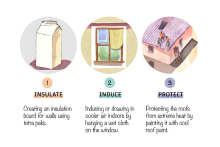
In response to Vancouver's 2021 heat dome, the report focuses on protecting Vancouver's Downtown Eastside (DTES) communities living in social housing through DIY passive cooling techniques. The proposed solutions aim to lower heat risks affordably and quickly. Aligned with Vancouver's Climate Adaptation Plan, the report advocates for sustainable, long-term improvements in urban heat resilience, stressing the need for more robust strategies to ensure a safer living environment for marginalized populations.

Partner: Union Gospel Mission (UGM)
Funder: City of Vancouver & UBC (McConnell Foundation Grant)
Keywords: social sustainability, sustainable development & green economy, urban heat resilience, extreme heat, climate action, climate equity 

PDF
2024
Radhika Singh

This report analyzes models, best practices, and common stumbling blocks for City-University partnerships on climate justice. It aims to inform the development of the CLimate Equity Action and Resilience (CLEAR) project, a new partnership in Vancouver, Canada.

Partner: UBC Sustainability Hub & UBC Learning Exchange
Funder: UBC (McConnell Foundation Grant)
Keywords: social sustainability, sustainable development & green economy  

PDF
2024
Linsell Tim Linsell

Focusing on recentering water engagement through an Indigenous lens, anchored by the Fraser River/Estuary model, this project features a workshop and actionable guidance for Sierra Club BC's Mother Tree Local Leaders Program. Empowering leaders to nurture personal and organizational water relationships, it fosters diverse environmental stewardship through land-based education. Includes insights from collaborating environmental NGOs that translate expertise into practical suggestions.

Partner: Sierra Club BC
Funder: UBC (Sitka Foundation Grant)
Keywords: sustainability in education, water, Indigenous knowledge systems 

PDF
2023
Jessica Groat

The purpose of this research is to better understand the breadth and depth of relationships and networks that coordinated actions across multiple sectors during extreme heat events (EHE) in South Vancouver and Marpole. Both neighbourhoods are disproportionately impacted and vulnerable to EHE. The social network analysis demonstrated that neighbourhood level networks of place-based organizations are the most effective in addressing EHE in a quick, coordinated and community-based manner.

Partner: City of Vancouver
Funder: City of Vancouver
Keywords: equity, diversity, inclusion, healthy city, climate resilience social sustainability

PDF
2023
Rajpreet Sidhu

Pages