The Sustainability Teaching Resource Library contains around 100 reports, toolkits, multimedia and more, to support faculty creating and updating teaching materials. Curated and maintained by the Sustainability Hub to advance sustainability teaching and learning at UBC.

Given recent geopolitical shifts to abandon an organized response to the climate crisis and the projections of the 2023 IPCC report, scientists have confirmed that climate collapse is likely, if not inevitable. In this perspective paper, we pose two questions: What is the job of a sustainability educator at this point in the climate crisis? What good is hope if the object of hopefulness is not achievable? We examine these questions through a literature review of climate emotions and hope discourse in sustainability education, narrowing our focus to critical hope. Building on existing research, we contend that a sustainability educator’s job in this phase of climate collapse is to convey a praxis of critical hope, which attends to the following realms: (a) the core sustainability curriculum, (b) engagement with emotions and coping skills, (c) the interrogation of complex systems and embedded injustices, and (d) pathways and strategies for organized action. The discussion presented herein analyzes student reflections from a higher-education sustainability course that integrated the principles of critical hope into applied projects. Ultimately, a praxis of critical hope might allow sustainability educators to encounter the dire realities of the climate crisis while sustaining themselves and their students through a long-term labor of love.

2025
Rebecca J. Williams and Kari Grain

Our goal is to help young Canadians understand how STEM, environmental, and agricultural science can work together to improve the health of all the earth’s communities. Students work with community gardeners, Elders, and science educators in garden spaces to learn through hands-on experience about growing food crops and the science of plants, soil health, and environmental care.

2025
UBC Faculty of Education

A pilot project demonstrates how climate change education can be integrated into an existing medical school curriculum. Climate change is a health emergency, yet many medical schools provide minimal planetary health content in their undergraduate medical curriculum. This pilot project answered the global call to recognize the impacts of climate change on human health by creating a way to address the gap in the curriculum at the University of British Columbia.

2025
A. Gangji, MEd, E. Willis, MA, A. Yee, MD, MET, J. Gil-Mohapel, MSc, PhD, V. Stoynova, MDCM, FRCPC, MHPE

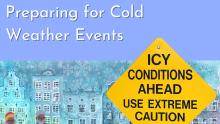
Produced by the UBC Climate Hub student team, this is a guidebook to mindfully preparing for extreme cold, rapid snowfall or freezing rain events and the possibility of power outrages to help build individual and community-wide safety, security, wellbeing and resilience.

PDF
2025
UBC Climate Hub

Produced by the UBC Climate Hub student team, this is a pocket guide to community and collective action rooted in shared dignity. The guide includes sections on Heat, Wildfire, Air Pollution, Flooding, and Justice & Care.

PDF
2025
UBC Climate Hub

Produced by the UBC Climate Hub student team, this is a pocket guide to building care, wellbeing and community. The guide includes sections on Climate Emotions, Validating Feelings, Resilience Justice as Care, and Care in Community.

PDF
2025
UBC Climate Hub

This document is an annotated list of selected toolkits that support climate justice-focused community engagement. These resources have been selected from a diverse range of community engagement and climate justice toolkits, including those focused on university initiatives, engagement process, engagement ethics, organizational development, education and awareness, policy and advocacy, and communication. The toolkit review was conducted by Sustainability Hub and the Centre for Climate Justice (CCJ).

PDF
2025
Mohini Singh, Community Engagement Research Project Assistant at CCJ and Sustainability Hub, under the guidance of Dr. Kshamta Hunter

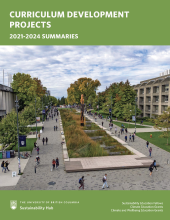
University graduates are entering a world impacted by climate change, biodiversity loss, food and water insecurity, and upheaval in economic and social systems. Addressing these issues requires transformative perspectives, innovation, and new approaches. The Sustainability Hub catalyzes interdisciplinary teaching and curriculum innovation through the Sustainability Education Fellows program, Climate Education Grants (CEG) and Climate and Wellbeing Education Grants (CWEG). This report showcases some of the projects that the Hub has supported in recent years with the hope of inspiring more faculty members across disciplines to develop sustainability and climate change curricula at UBC.

2024
UBC Sustainability Hub

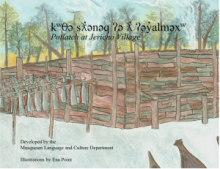
The kit is written from the perspective of the community and provides an opportunity for students to learn about the land on which most of Vancouver, including the Museum of Anthropology, is situated. Learning about Musqueam directly from Musqueam community members is extremely important. Today, we continue to learn as our ancestors did, from experiences and stories.

2024
Musqueam

The HE Climate Action Toolkit, produced by the Climate Commission for UK Higher and Further Education, identifies critical elements to climate action across 5 themes: leadership, teaching, research, community engagement and campus management. These elements support institutions to reach net-zero targets, prepare students and staff with skills and attributes for a changing world, protect biodiversity and worktoward climate justice.

2024

The Climate Kind Pedagogy project attempts to collect, develop and share kindness-informed educational approaches to support climate education. It offers an interdisciplinary approach through constructivism, reflexive pedagogy, foundational values and transformative learning theory.

2023
Kshamta Hunter

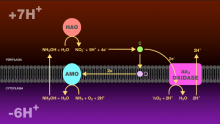
A collection of open figures for visualizing electron transport chains functioning within the global nitrogen cycle and the global carbon cycle. Suitable for microbiology and biochemistry courses within higher education.

2023
Lindsay Rogers

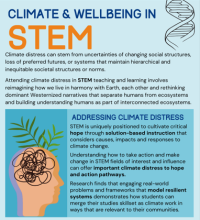
Learn more about the intersection of climate wellbeing and STEM learning and research. This resource may be printed and shared on bulletin boards around campus. 

2024

This guide is designed to assist Faculty Curriculum Chairs and others involved in curriculum development. It outlines the steps necessary for the approval of new and changed curriculum at UBC Vancouver. It is maintained by the Vancouver Senate Curriculum Committee and Senate and Curriculum Services.

2022
Compiled and maintained by the Office of the Senate with oversight from the UBC Vancouver Senate Curriculum Committee (SCC)

Whether you are seeking to make changes or updates to an existing program, develop a new program (including undergraduate or graduate degrees as well as certificates, diplomas and other non-credit learning opportunities), support is available.

2024
Office of the Provost & Vice-President Academic

The “Embodied Carbon of Buildings: International Policy Review” report is an overview of current global policies and technical resources to measure and reduce embodied carbon emissions from buildings and construction materials. 

This report was commissioned by Forestry Innovation Investment Ltd. to better understand the range of approaches taken by leading countries to addressing these embodied emissions and the strategies that could be implemented in Canada. The information is based on a review of leading policy and programs across 15 countries around the world.

Partners:
  • Forestry Innovation Investment Ltd. (funder)
  • SCIUS Advisory (contributor - Helen Goodland from SCIUS reviewed the work)
UBC Student Research Assistants:
  • Nicole Balles, UBC Civil Engineering
  • Simarjeet Nagpal, UBC School of Community and Regional Planning
  • Mohini Singh, UBC School of Public Policy and Global Affairs
  • Shiyao Zhu, UBC Faculty of Forestry

Keywords: embodied carbon, GHG emissions, policy
PDF
2024
Angelique Pilon, Megan Badri & Kah Mun Wan

The program allows for the formation of a learning community around a shared understanding of the ways in which climate change impacts us as a global community. Each week, participants are challenged with the hard questions around these topics and are able to bring both the ideas and innovative learning practices directly into their classrooms. Students are then able to see the global interconnectedness and understand complex concepts through comparative analysis of the effects, impacts, and resulting realities within their local communities. 

2024
Climate Action Exchange

Pages