COP30 – the Conference of the Parties for the United Nations Framework Convention on Climate Change – has just wrapped up in Belém, Brazil. This year, UBC sent a delegation of 14 faculty, students, and staff to observe the official negotiations both virtually and on the ground in Brazil.
Collective action by civil society vital while international agreement on fossil fuels delayed
In the run up to COP30, organizers emphasized the essential role of collective action. This recognizes that while country leaders negotiate official agreements, effective climate action also relies on the active participation of civil society – not least universities.
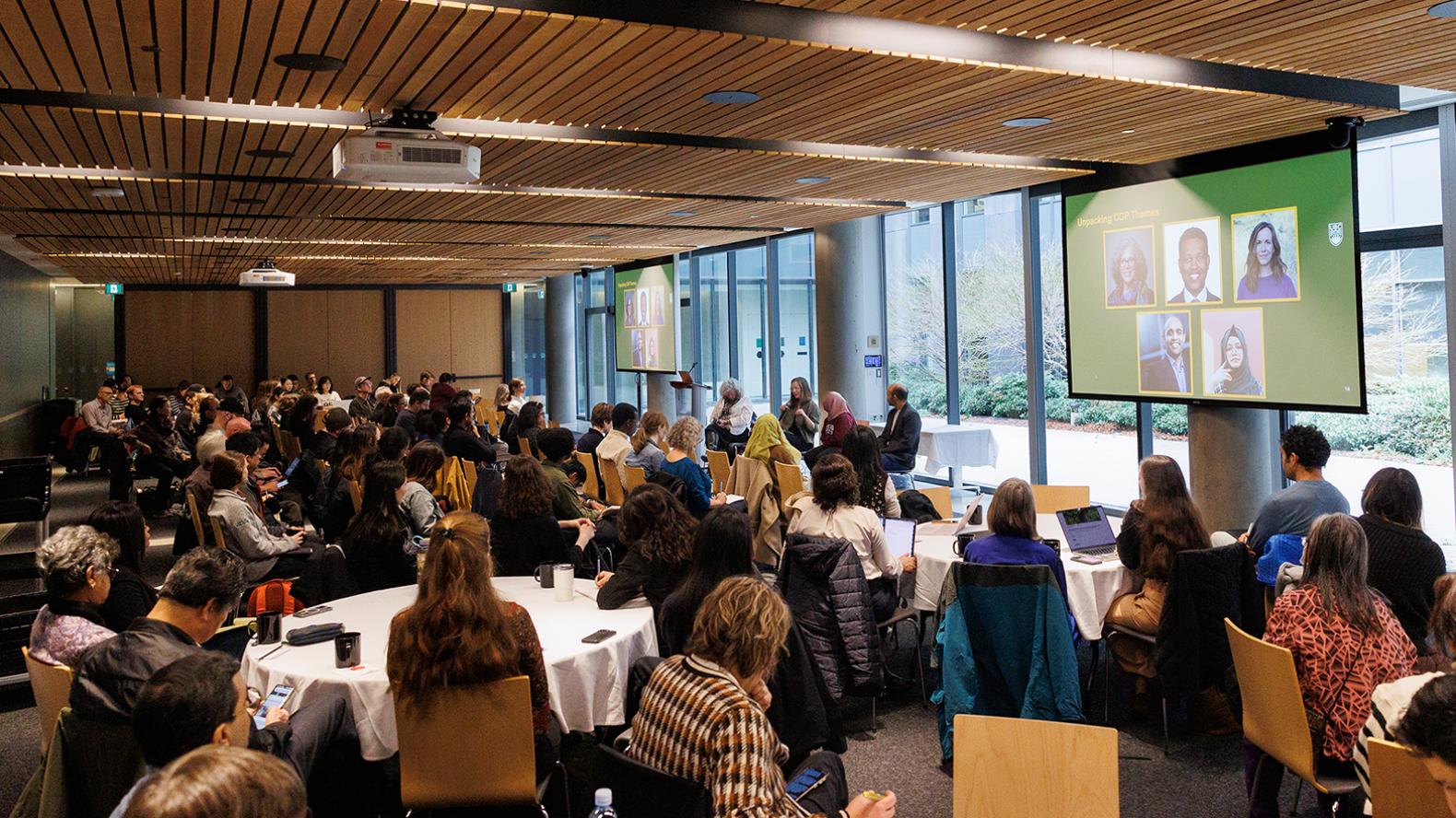
To showcase UBC’s role in advancing climate action, the Sustainability Hub organized Negotiation to Innovation with the support of the Pacific Institute for Climate Solutions, a one-day event highlighting key elements of the global Action Agenda. Over 100 faculty, students and staff joined for an exciting day of learning and dialogue about how society can both mitigate and adapt to climate change impacts. The opening plenary featured members of the UBC COP30 delegation, followed by concurrent sessions organized by UBC experts, research clusters, and Institutes. The final session, organized by UBC’s Climate Solutions Research Collective, focused on breaking down barriers between science and its implementation, especially in terms of policy.
So while the official COP30 negotiations concluded without a strong roadmap to phase out fossil fuels, Carol Liao (Co-Director of Centre for Climate Justice, COP29 delegate) reminded the audience that, “the work of achieving climate commitments happens daily in classrooms, labs, field sites and communities.”
“The work of achieving climate commitments happens daily in classrooms, labs, field sites and communities,” — Dr. Carol Liao.
Delegates see hope in the face of uncertainty and powerful interests
While COP30 was just beginning, this year’s delegates offered their insights on a sense of uncertainty surrounding the global negotiations. “I’m not excited, I’m apprehensive,” said Dr. Kathryn Harrison, COP30 delegate and climate expert, as she opened the plenary roundtable. A number of competing powerful voices at these international gatherings can influence the outcomes, she observed.
But delegates saw reasons for hope. Dr. Vikramditya Yadav (Chemical Engineering, COP30 delegate), highlighted rapid growth in the clean energy industry, noting how energy sources and employment in the sector have shifted over time. Delegates commented on how researchers and educators can inform these shifts to reduce disruption to livelihoods. And while imperfect, Dr. Kathryn McConnell (Sociology, COP30 delegate), added that the UN negotiations do create important opportunities for global accountability.
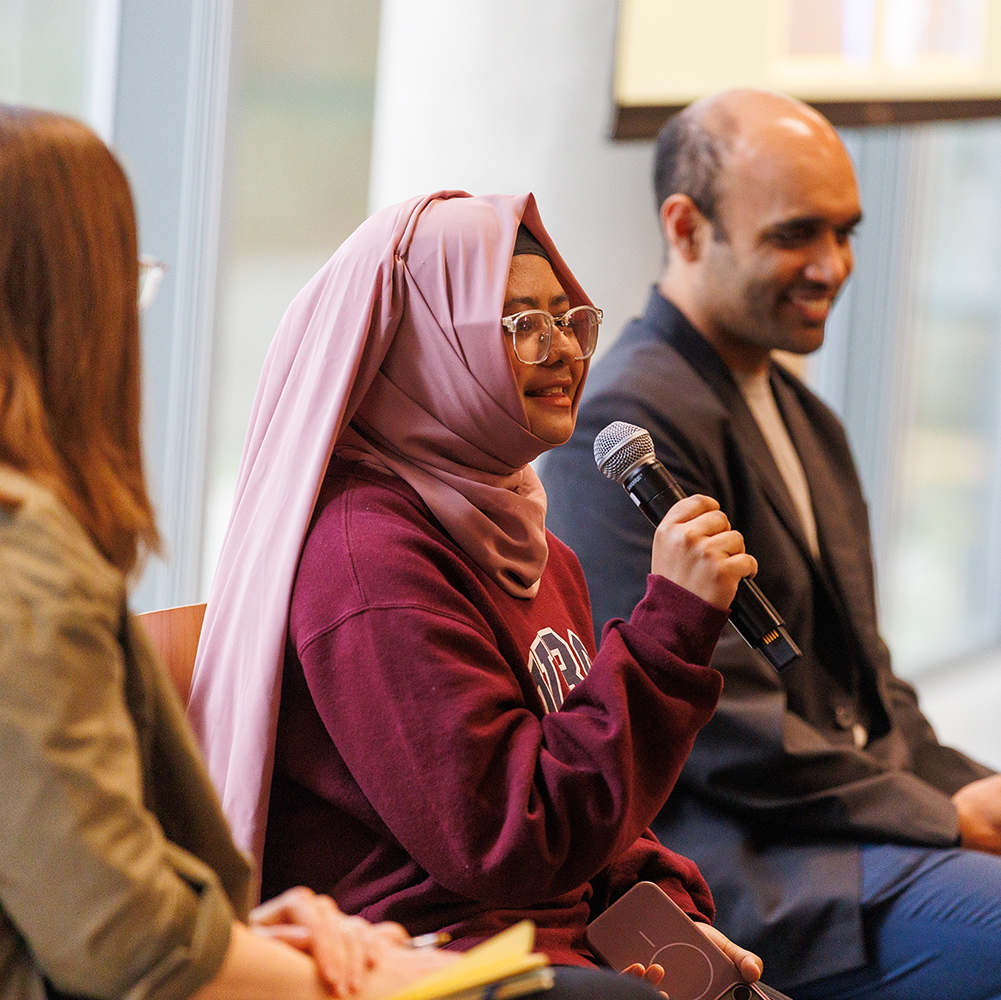
Echoing calls at COP30 for collective action, delegate and undergraduate Math student, Maisha Morshed, emphasized the role of collaboration as a path forward. Maisha called attendees to ground themselves in their lived experience, and use that energy to help inspire lasting change.

Research talks showcased innovations in biomaterials, forestry, urban resilience and disaster resilience
Universities play important roles in advancing climate action – through educating future leaders and through cutting-edge research. Concurrent research showcase sessions throughout the day shared updates on topics including biomaterials, forest carbon, disaster preparedness, urban resilience, and intersecting ecological challenges.
The sessions challenged attendees to rethink carbon emissions and climate adaptation through panel discussions, roundtables, and an interactive workshop. In one session, attendees learned how agricultural emissions will take the world past the recommended target of 1.5°C, agreed to by world leaders in Paris at COP21. However, panelists emphasized that we can all contribute to climate action by advocating for more sustainable consumption to reduce our environmental impact.
In another, researchers showed how they are creating innovative materials to shift reliance on carbon. One example included using woody fibres to create a leather soccer ball, showcasing how we can reduce our reliance on current materials and methods that carry significant environmental impacts.
“Collective action is crucial, but individual efforts can also create momentum and lead to broader systemic change,” — Dr. Tahia Devisscher.
Although there are challenges to scale the innovations that occur in university labs, there are opportunities to amplify the reach of the climate solutions being developed at UBC. Robert Godin, UBCO (UBC COP26 delegate), encouraged researchers to share their work directly with policy-makers to ensure that their results can impact decision-making.

Building relationships across academic disciplines, and with groups most impacted by climate change
The event highlighted the importance of building connections, reaching beyond disciplinary boundaries, and fostering relationships to enact meaningful change.
“It was fun bringing together everyone's areas of expertise to focus on the larger issues at hand, and reminded me of the big picture impacts of my research.” — Negotiation to Innovation event attendee.
Speakers and attendees throughout the day emphasized the need to continue to invest in building and maintaining relationships with those most impacted by climate change – including and especially Indigenous Peoples; long-term connections are an important part of ensuring that the voices of those most impacted by climate change are influencing the pathways forward.
Learn more about presenters and speakers at Negotiation to Innovation, UBC's delegation for COP30, and UBC at COP.