
A number of SEEDS Sustainability Program collaborative applied research partnerships, informed by the Campus Biodiversity Initiative: Research and Demonstration (CBRID) Steering committee, are helping to identify key campus biodiversity priorities and test out monitoring strategies. These include the first baseline research on shade coverage in UBC residential neighbourhoods, an evaluation of campus green rainwater infrastructure, and inventory of community food gardens – all to support informed planning and design decisions to enhance biodiversity.
Shade mapping simulation highlights opportunities to reduce heat-related stress on campus, enhance human wellbeing
The heat dome that enveloped the Pacific Northwest in June 2021 was an unprecedented event resulting in numerous heat-related deaths and hospitalizations (Philip et al., 2022). Shade is an important factor in urban environments as it protects against heat impacts by providing comfort, reducing heat-related stress, and enhancing overall wellbeing.
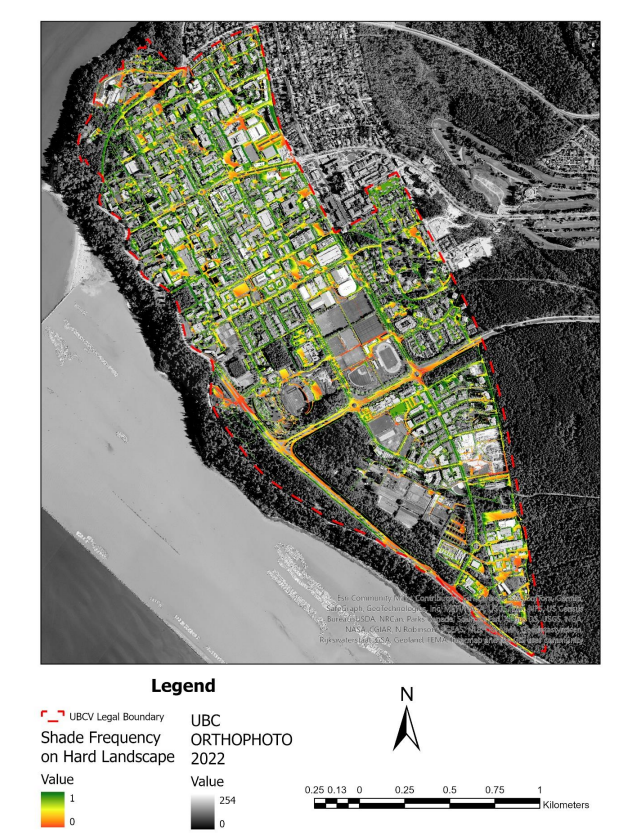
To support climate adaptation and community wellbeing at UBC’s Point Grey campus, SEEDS student Chenyao (Jamie) Wang developed a method for shade mapping using high-resolution LiDAR data and sun position data to create a Digital Surface Model (DSM) and hillshade analysis to simulate shade coverage across different locations at 15-minute intervals.
Findings revealed significant variations in shade coverage exist between different campus neighbourhoods, highlighting the need to increase shade in the Stadium Neighbourhood, University Boulevard, Westbrook Place, and at the Bus Exchange.
The results were presented to UBC’s Campus + Community Planning department to inform future landscaping and public space plans.
Green rainwater infrastructure evaluated in context of extreme rainfall events
This research project investigated the sustainability, performance, and management of Green Rainwater Infrastructure on the UBC Vancouver campus, in order to inform rainwater management in the context of increasing extreme rainfall events.
Green Rainwater Infrastructure features including bioswales, rain gardens, and green roofs, were evaluated for their effectiveness in stormwater mitigation, environmental benefits, and maintenance practices. Students from ENVR 400 – a capstone course for Environmental Science students developed a research project combining on-site observations and qualitative assessments of 33 sites to record performance under typical rainfall conditions.
Findings identified several current challenges, such as inconsistent maintenance and the absence of a centralized data system. But the team also found opportunities for enhancements including real-time monitoring systems for rainfall, runoff, and water quality, as well as increased optimizing the layout of Green Rainwater Infrastructure features using GIS to ensure that they are strategically placed in areas most at risk for flooding.
The study provides valuable insights for planners at UBC, including an interactive GIS map to support campus rainwater management and infrastructure maintenance. In addition, the research contributes to addressing the broader societal issue of climate resilience, especially in the face of urbanization and increased extreme rainfall.

Community gardens inventory updated to include food and non-food species
UBC’s food system accounts for over 29,000 tons of CO2 emissions per year, making it the third largest source of GHG emissions after commuting and heating/cooling buildings. Understanding food systems at the scale of plant biodiversity is critical to both reducing food systems emissions and strengthening food systems (Mijatović et al., 2013).
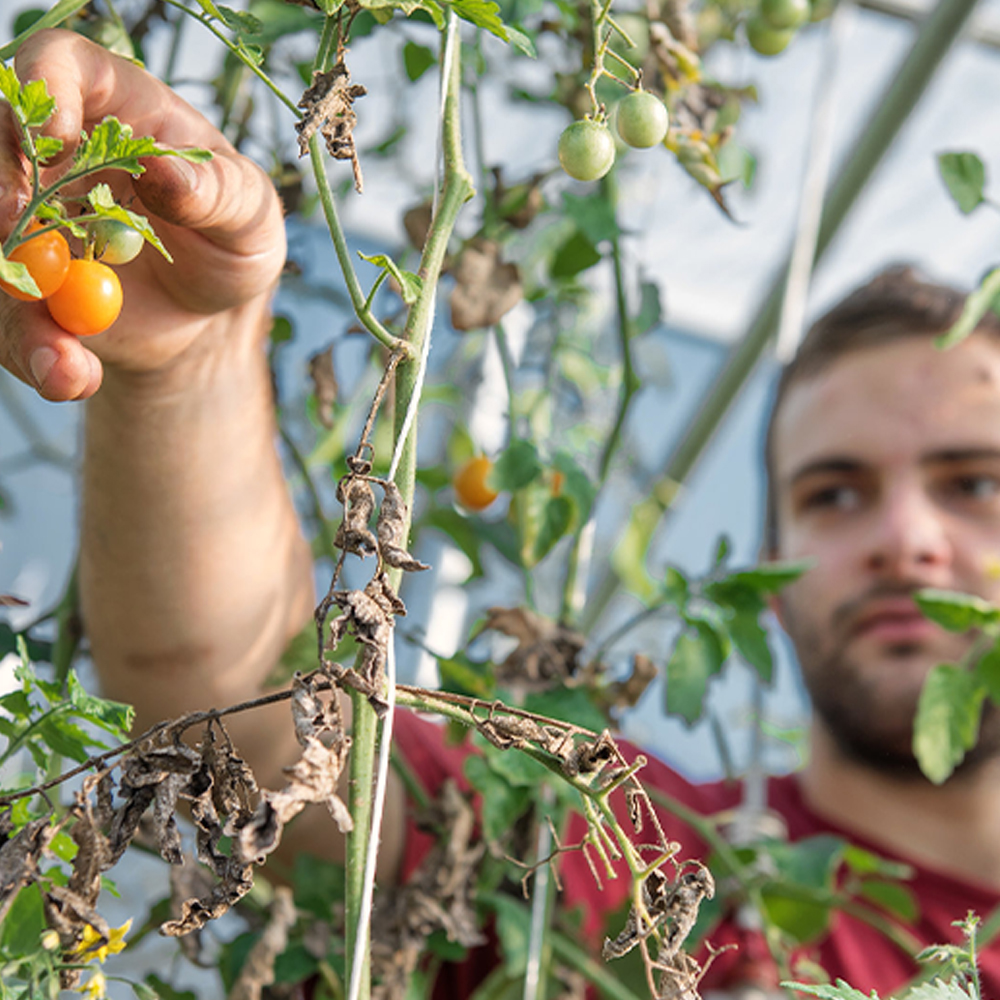
Students participating in the SEEDS program via LFS 450, an applied learning and professional team-based applied research course, incorporated a Community-Based Action Research methodology to survey gardeners and community garden representatives, as well as conducting an inventory assessment, identifying gardens across campus and logging important information and plant species grown.
The project team delivered two key resources:
- Updated 2025 UBC Community Garden Baseline that included updated locations, photos, contact information, and lists of both food and non-food species found at each garden
-
A 2025 Climate-Ready Plant List that included all food plants, non-food plants, and a climate resiliency assessment of all species found in campus community gardens.
“This research demonstrates that UBC’s community gardens are more than just green spaces. They are adaptive, biodiverse, and socially rich systems with huge potential to contribute to broader food system resilience and carbon reduction at the UBCV campus. With improved coordination and management, these campus community gardens could grow in their social and environmental impact.” - SEEDS Sustainability Program participants, Vanessa Liebel, Graciela Licardo, Natasha Bonn, Franny Rainbow, Arkar Min San, Larissa Tobacco, Desiray Harber.
Together with the Faculty of Science, the SEEDS program manages CBIRD to advance sustainability and applied research on the Vancouver campus in the area of biodiversity, supporting the institutional goal to develop a first campus Biodiversity Strategy.
CBIRD is led by a Steering Committee including representation from six of UBC’s faculties and schools, and 15 academic and operational departments, and provides advisory guidance to advance CBIRD vision to enhance, conserve, and steward campus urban biodiversity.
Learn more about the SEEDS program and CBIRD.