Words by Caitlin Lichimo.
Coffee ranks as one of the most widely consumed beverages worldwide exceeding 10 million tons of global output each year, but did you know how much by-product waste it generates?
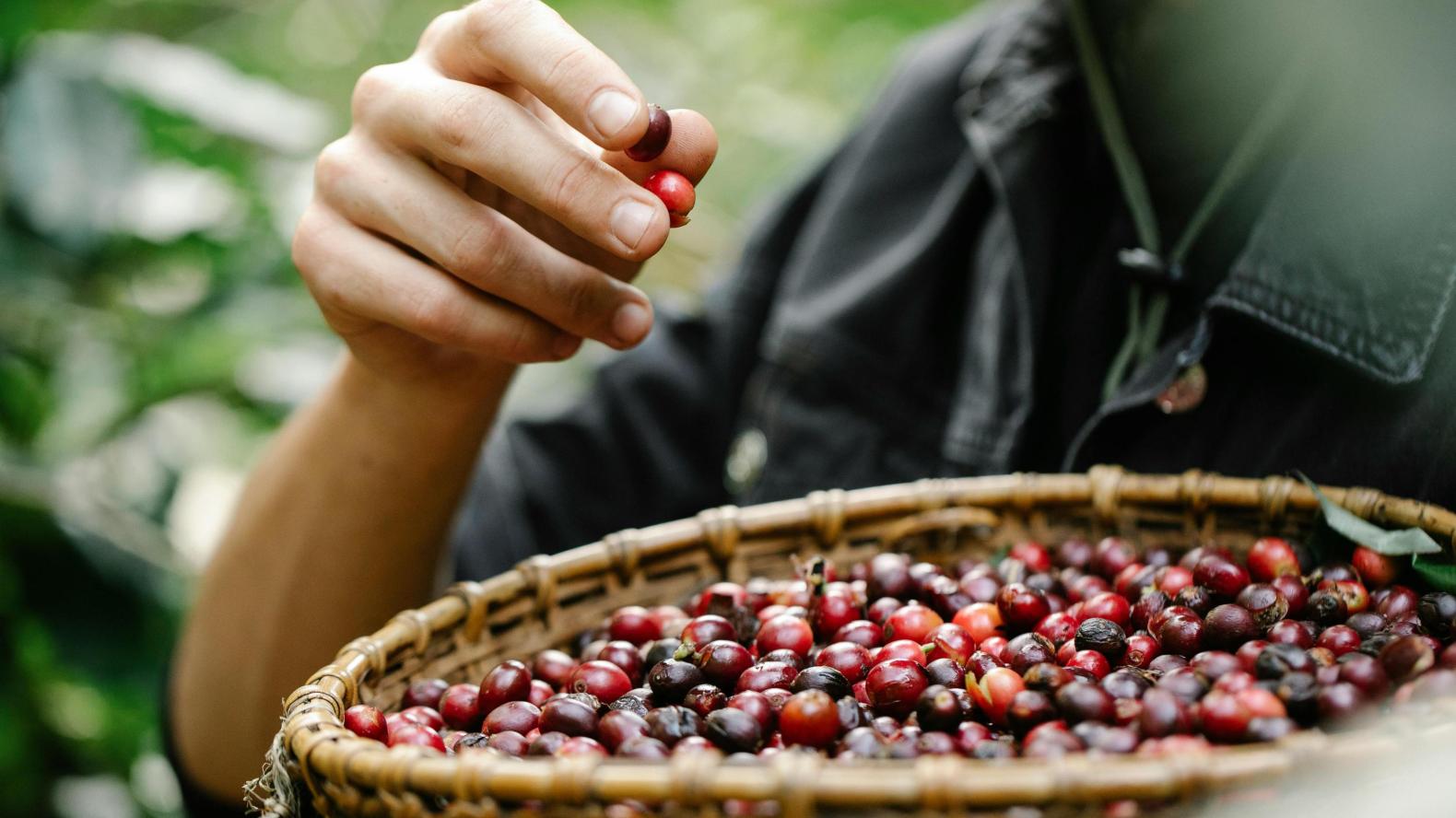
While the coffee bean is used to create the actual coffee beverage, the outer layer of the bean (the ‘cascara’) gets discarded as byproduct waste, making up nearly half of the harvested biomass. Once discarded, the cascara becomes an environmental pollutant due to its chemical composition, and its accumulation in the landfill may have negative environmental impacts if not treated properly, particularly in freshwater ecosystems.
Human health and sustainability benefits of upscaling coffee by-product waste
The increasing global demand for coffee generates substantial by-product waste, such as coffee cherry skin and pulp, known as cascara. Cascara is the fruity husk around the coffee bean which normally gets separated during the harvesting process. However, due to its rich macronutrient and fibre content, nutrient-dense and antioxidant benefits for human health, cascara is a promising candidate as a sustainable food additive in industrial applications.

UBC study offers evidence for region-specific coffee cascara nutraceutical applications
A recent study co-authored by Dr. David Kitts from UBC’s Faculty of Land and Food Systems explains how the chemical complexity and variability of coffee cascara composition are influenced by factors such as coffee variety, geographic origin, and processing methods, thus restricting its use in applications with consumer health benefits that require a standardized composition. Accurately understanding its nutrient composition is critical to optimizing Cascara's potential sustainable and economic use in functional food and nutraceutical applications.

Sourcing and analyzing farmed coffee cascara from seven different geographic regions, the researchers report common general phytochemical profiles but significant variations in the chemical composition and antioxidant properties of coffee cascara across the regions.
These findings provide further evidence to support the coffee industry’s revalorization of cascara as a value-added ingredient in novel and functional applications – such as in culinary products, other beverages, soil applications, and eco-friendly materials – to support a circular economy.
Read the study: Phenolic Acid Composition of Coffee Cascara in Connection with Antioxidant Capacity: A Geographic Assessment